





FNAF Chase Down
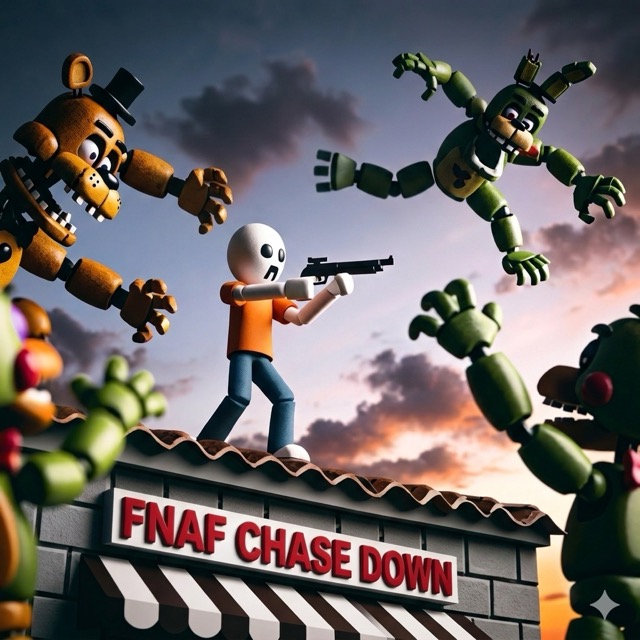
Guide an animatronic through enemy-filled bases and keep enough distance for its automatic attacks to work.
About FNAF Chase Down
FNAF Chase Down is a mouse-controlled action shooter from Play-Games.com. You move your character around the map while it fires at opponents that enter range. Contact with enemies damages you, making positioning the central decision.
Clearing a base advances the run to another stage. Weapons, upgrades, and other pickups can help as the enemy groups become larger.
How to Play FNAF Chase Down
Use the mouse to move your animatronic. Approach enemies closely enough to bring them into firing range, then keep moving so they cannot surround or repeatedly touch you.
Use the corridors and corners to control how many opponents can reach you together. Watch the space behind your character before retreating; backing into a dead end can remove the distance your attacks need.
Collect a useful pickup when the route to it is clear. Crossing the middle of an enemy group for an upgrade can cost more health than the item helps you recover through better positioning.